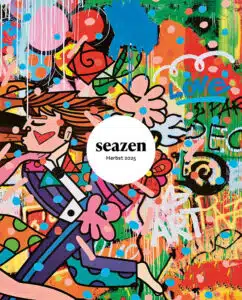



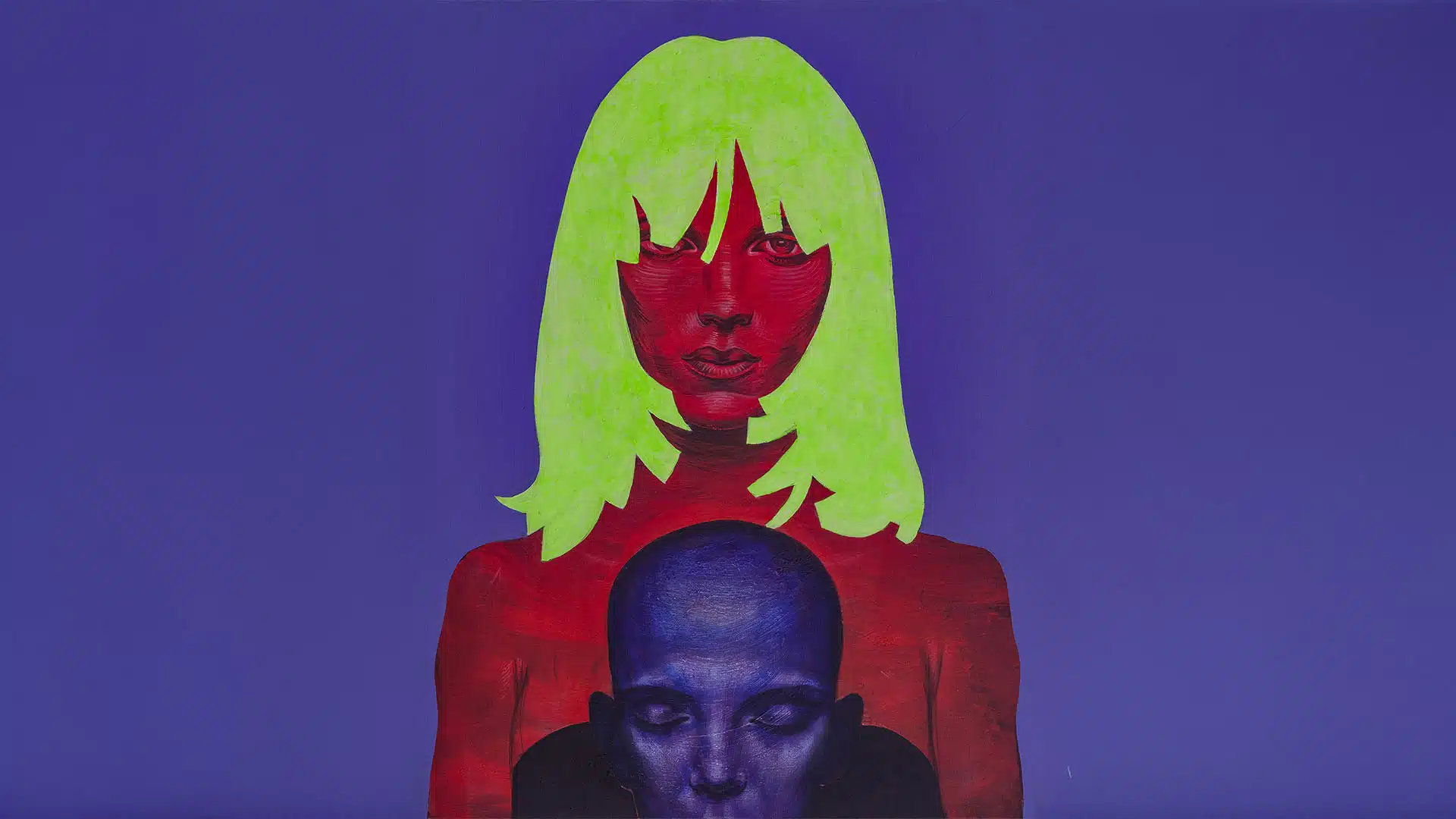
When Sergey Grinevich paints, something happens that can almost only be understood in the rear-view mirror. Lines that seem inconspicuous at first open doors. Colors that feel like coincidence turn out to be precise decisions. And figures that appear to be standing calmly in space suddenly begin to assert their own reality.
For the Seazen Winter Edition 2025/26, Grinevich has not only reinterpreted two of his iconic works, but rethought them. The versions of “Wig 1” and “Wig 2” created for Seazen show the essence of what characterizes his art: an uncompromising search for inner truth, for what lives beneath the surface. On the cover, we are greeted by a figure that is at once powerful, vulnerable and enigmatic. Her colors are radical, her posture still. This is precisely where the attraction lies.
An artistic language that shows more by taking away
As Friedrich Kisters describes, Grinevich is an artist who does not paint what he sees, but what lies beneath. His working method is a permanent dialog with the canvas. Layers are applied, sanded off, painted over, opened up again. In the article, this process can be seen in real time: the ballerina, who at first appears almost finished, is swallowed up by dark pours of paint in the next moment – only to later emerge from the depths again, more precisely than before.
Destruction as a method. Reduction as precision. Abstraction as inner consequence.
Grinevich uses realism, sketchiness and pop art elements not as stylistic devices, but as languages between which he switches in order to make something invisible visible. The figures are beautiful, but never decorative. They are strong because they are contradictory.
His self-portrait with closed eyes is exemplary of this: an ironic critique of identity and perception, realized with minimal gesture and maximum effect.
Why this cover for winter 2025/26?
Because Grinevich expresses exactly what Seazen is all about: depth, clarity, attitude.
His new version for the cover is not just a picture, but a conversation – about identity, masks, gazes and what you only see if you look longer.
It is a work that interprets winter not as a season, but as a state: a moment of concentration, of stillness, of turning inwards. And at the same time a powerful prelude to everything that can come in the new year.
Further information:

Sergey (Sjarhej) Grinevich, born near Hrodna in 1960, is one of the most important contemporary artists in Belarus. He began his training early: at the age of six at art school, at eleven at the Belarusian State Academy of Arts, where he graduated in 1983.
His work combines motifs from history and everyday life with influences from Andy Warhol, Erik Bulatov and Alex Katz. In serial, colorful compositions, he creates iconic, often ironically broken images that critically question consumer culture, militarism and religious symbolism. Grinevich is known for his multi-layered examination of the iconography of socialist realism and for his precisely reduced visual language.
He has exhibited internationally, including at the Museum of Modern Art Minsk, the Marc Chagall Center Vitebsk, the Espace Pierre Cardin Paris, in New York, Warsaw, Baden, Kiev, Florida and Spain. He is a member of a renowned group of artists and an established figure on the Belarusian art scene.
Cover artwork winter 2025/26
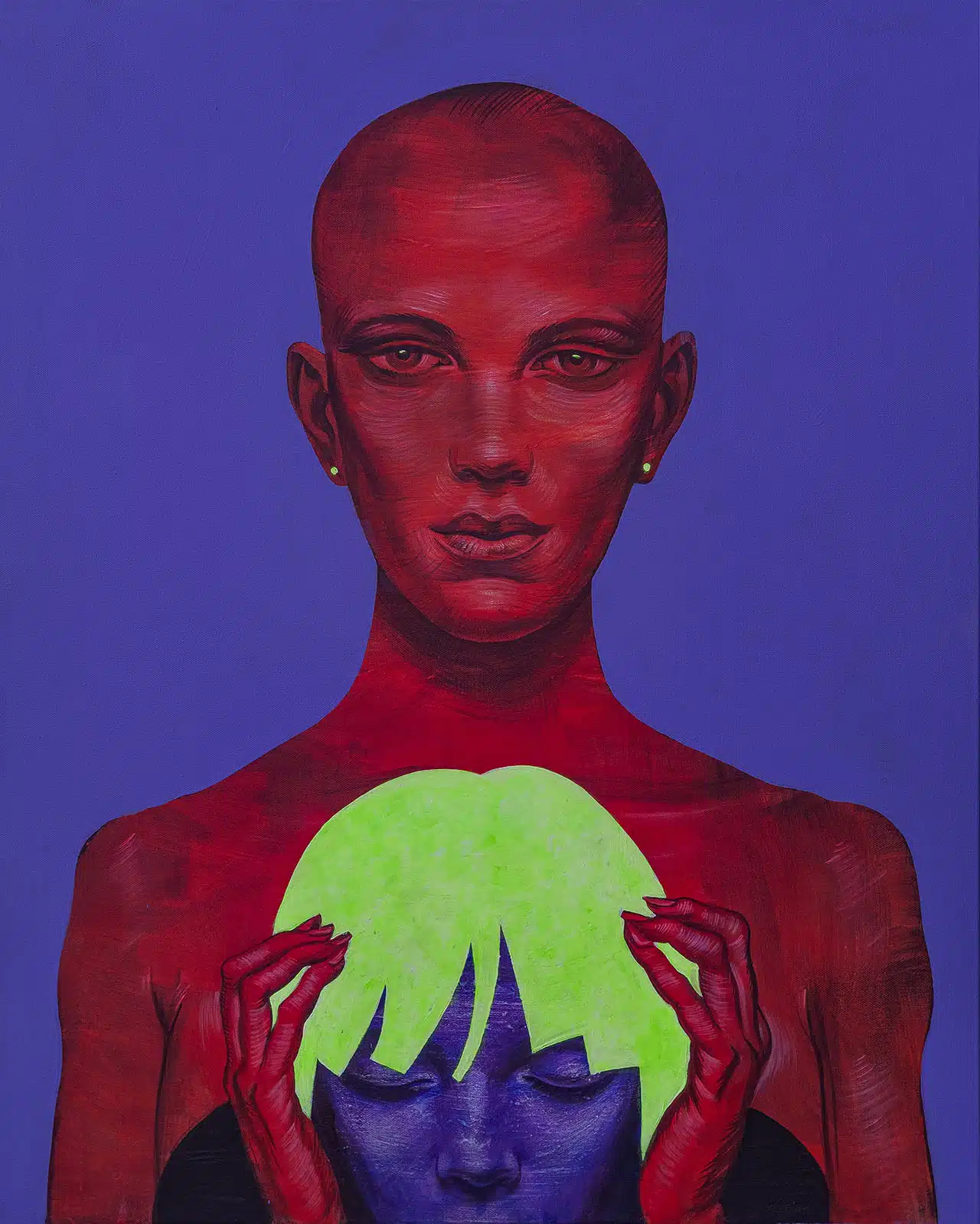
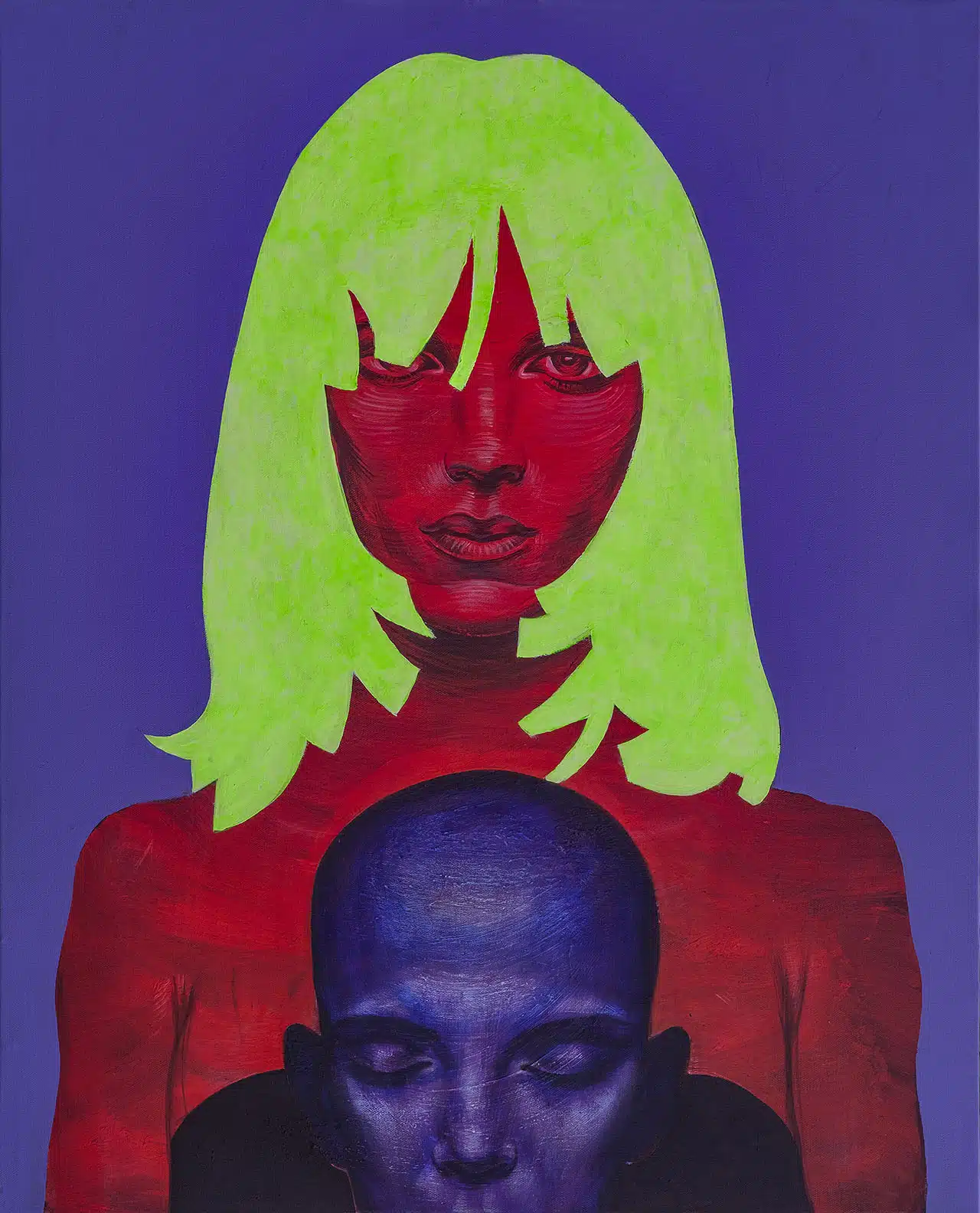
SERGEY GRINEVICH, WIG 2 (2009), ACRYLIC ON CANVAS, 100 X 81 CM, NEW VERSION FOR THE SEAZEN WINTER EDITION 2025/26