


From the quiet of church restoration to the intoxication of millions and back to himself: Wolfgang Beltracchi is without question one of the most dazzling figures in contemporary art history. A portrait of a genius who first had to learn to sign with his own hand before he could truly be free.
Text: Friedrich Kister
Photos: Alberto Venzago
When you watch Wolfgang Beltracchi paint today, you don’t see a criminal. You don’t even see the “forger” anymore—that label the world press seemed to have affixed to him for all eternity. You see a virtuoso at peace with himself. He stands before the canvas, eyes bright and alert, a mischievous smile playing at his lips, and he does things that seem physiologically impossible. There’s this moment when he takes ten brushes—one taped to each finger—and begins to dance across the paper. It doesn’t look like painting in any conventional sense. It’s choreography. He plays the canvas the way a pianist plays a grand piano—polyphonic, simultaneous, breathtakingly fast, yet possessed of a precise elegance. Anyone who witnesses it understands: this is someone who hasn’t merely learned to paint but has become one with the art itself.
But to understand today’s Wolfgang Beltracchi—the charismatic visionary, the family man, the critic and technophile—you have to rewind. You have to travel back to a time when the smell of turpentine and old varnish filled the air and a young boy learned that history could not only be preserved but rewritten.
A Father’s Legacy: A School of Seeing
Wolfgang Beltracchi’s path was by no means predetermined, and yet in hindsight it seems inevitable. His roots lie in craftsmanship, in the almost meditative work of restoration. His father was a church painter and restorer—a man who spent his days returning the old luster to church paintings and frescoes. This was the world Wolfgang grew up in. It wasn’t a childhood of abundance but one of modesty, rich in visual impressions and technical knowledge.
Early on, he learned not just how to hold a brush but what paint actually is. He learned the chemistry of pigments—how they age, how they crack, how light falls through centuries-old layers. His father taught him the craft of the old masters: how to treat cracks in varnish, how to fill in missing sections so seamlessly they vanish to the naked eye.
And it was right here, in the silence of church naves and the family workshop, that something happened which might be called the big bang of his later life. During his restoration work, the young Wolfgang realized he was good. Very good. Perhaps too good. When he filled in a missing hand or a fold of drapery in a fresco, the result often looked more vivid, more convincing than the faded original beside it. He wasn’t simply copying—he understood the intention of the original artist. He grasped that he could not only fill the gaps in art history but write his own stories into them.
This realization, coupled with the rather difficult economic circumstances of his youth, became the breeding ground for a fateful idea. Why merely restore what exists when you can paint what’s missing? Beltracchi decided to paint lost works—pieces listed in the catalogues raisonnés of great masters as “lost” or “never executed.” He simply filled these blank spaces in art history with creations of his own.
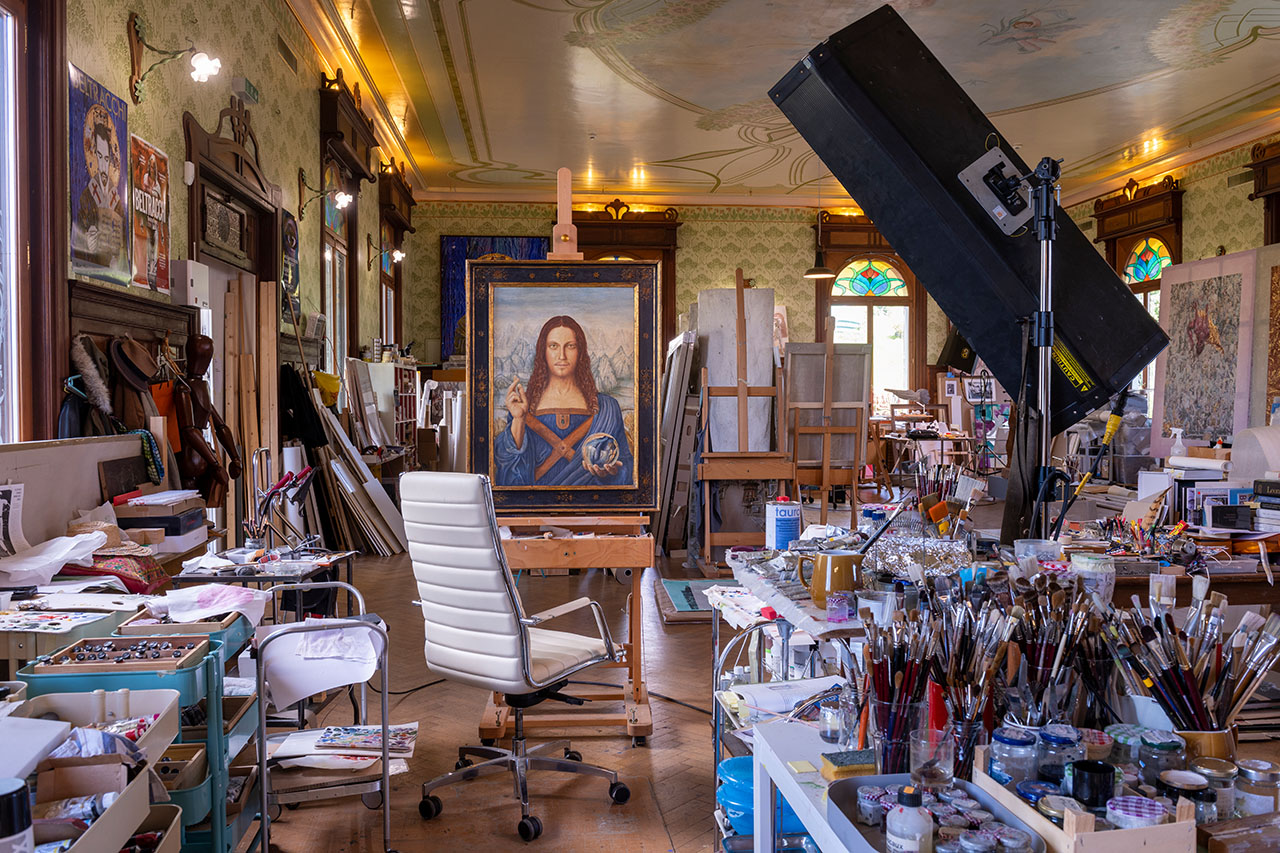
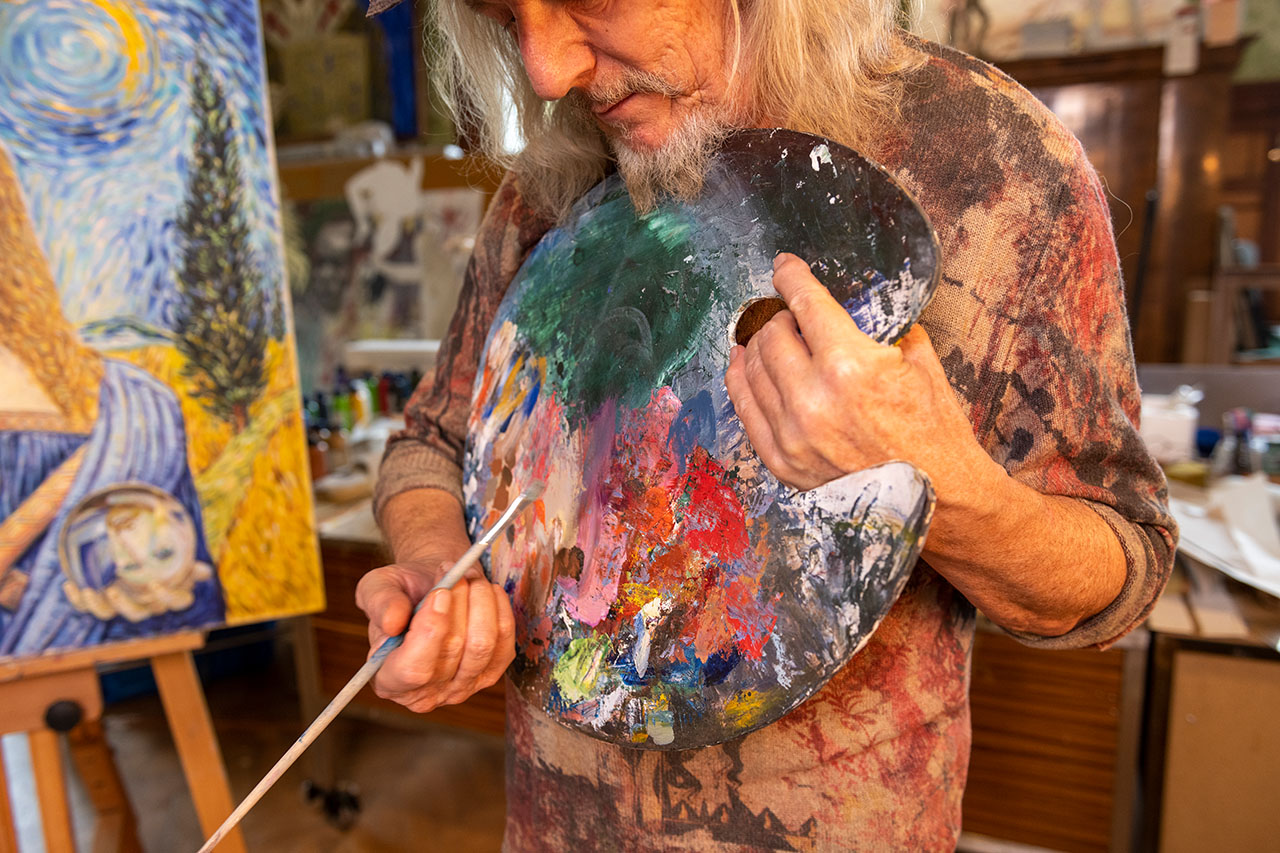
Wolfgang Beltracchi in his studio in Meggen near Lucerne—between canvas, paint, and an eye for the grand gesture in the detail
Wolfgang Beltracchi paints with ten pencils guided simultaneously—a performative technique somewhere between drawing and choreography.
The Chameleon: The Art of Total Empathy
What set Beltracchi apart from ordinary forgers—and what distinguishes him as an artist in his own right to this day—is his radical empathy. Most forgers copy. They take an existing painting and reproduce it. That’s technically demanding but soulless. Beltracchi did something different: he practiced method acting on canvas.
“He didn’t paint copies. He painted new originals.”
His greatest fortune was meeting his wife Helene. They remain inseparable to this day, a true unit. Helene knew nothing of Wolfgang’s activities at first, but he was completely open with her, explained everything, and left her free to walk away. The opposite happened—and Wolfgang without Helene is unthinkable, or at the very least, he would never have found such happiness.
To paint a Max Ernst, a Heinrich Campendonk, or a Fernand Léger, the Beltracchis didn’t just study their brushstrokes. They read their letters, pored over their biographies, traveled to the places where they had lived. Wolfgang and Helene immersed themselves in the psychological state of these artists. Before painting, Wolfgang would ask himself: “How did this artist feel when he looked out the window in Paris in 1920? What did he have for breakfast? What worries weighed on him?”
Wolfgang Beltracchi possesses the uncanny gift of completely suppressing his own ego and inhabiting the consciousness of another person. He became a medium. When he painted, it wasn’t Wolfgang’s hand guiding the brush but the spirit of the respective master—filtered through Wolfgang’s extraordinary technical ability. This capacity to think and feel his way into other people and situations is the key to his art. His paintings are so multilayered because they aren’t merely paint on canvas—they are materialized psychology.
These paintings, which he then artificially aged—with dust from old vacuum cleaner bags, antique frames, and forged adhesive labels—were so flawless that even the most renowned experts, auction houses, and museum directors harbored no doubts. They wanted to believe these masterworks were authentic, because they looked and felt like authentic masterworks.
The High and the Fall: A Life in the Fast Lane
The earnings were astronomical. The boy from modest circumstances became a multimillionaire. Together with his wife Helene—his accomplice in life and in love—he savored life to the fullest. They bought villas, traveled the world, furnished their homes with antique furniture. It was a rush, a dance on a volcano, financed by the greed and blindness of the art market.
But as in every classical tragedy, hubris was followed by the fall. A single wrong pigment—titanium white, which the forged Heinrich Campendonk could not have used in 1914, since it didn’t reach the market until 1920—brought the house of cards crashing down.
Then came the trial, the public execution by media, and finally prison. For most, this would have been the end. Social death. But here the true measure of Wolfgang Beltracchi’s character revealed itself. He didn’t go to prison a broken man but as someone ready to take responsibility.
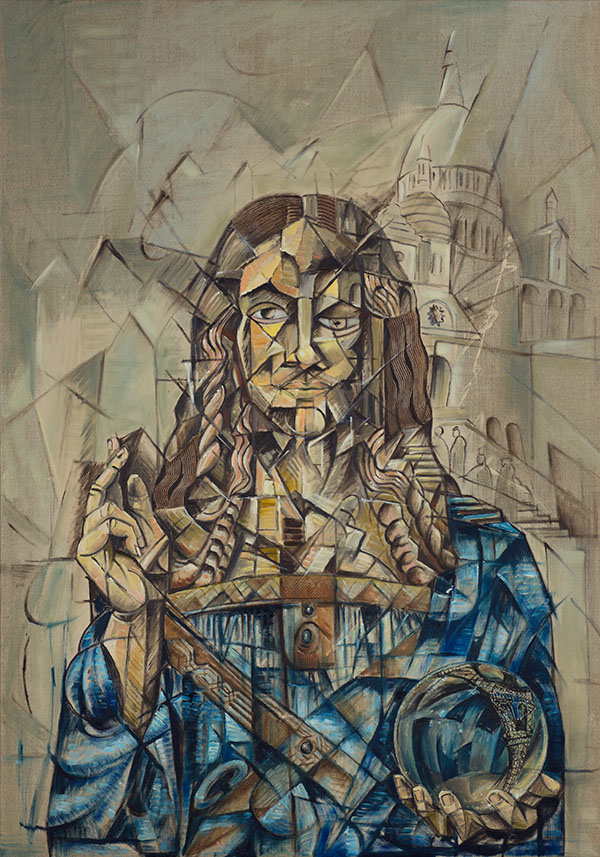
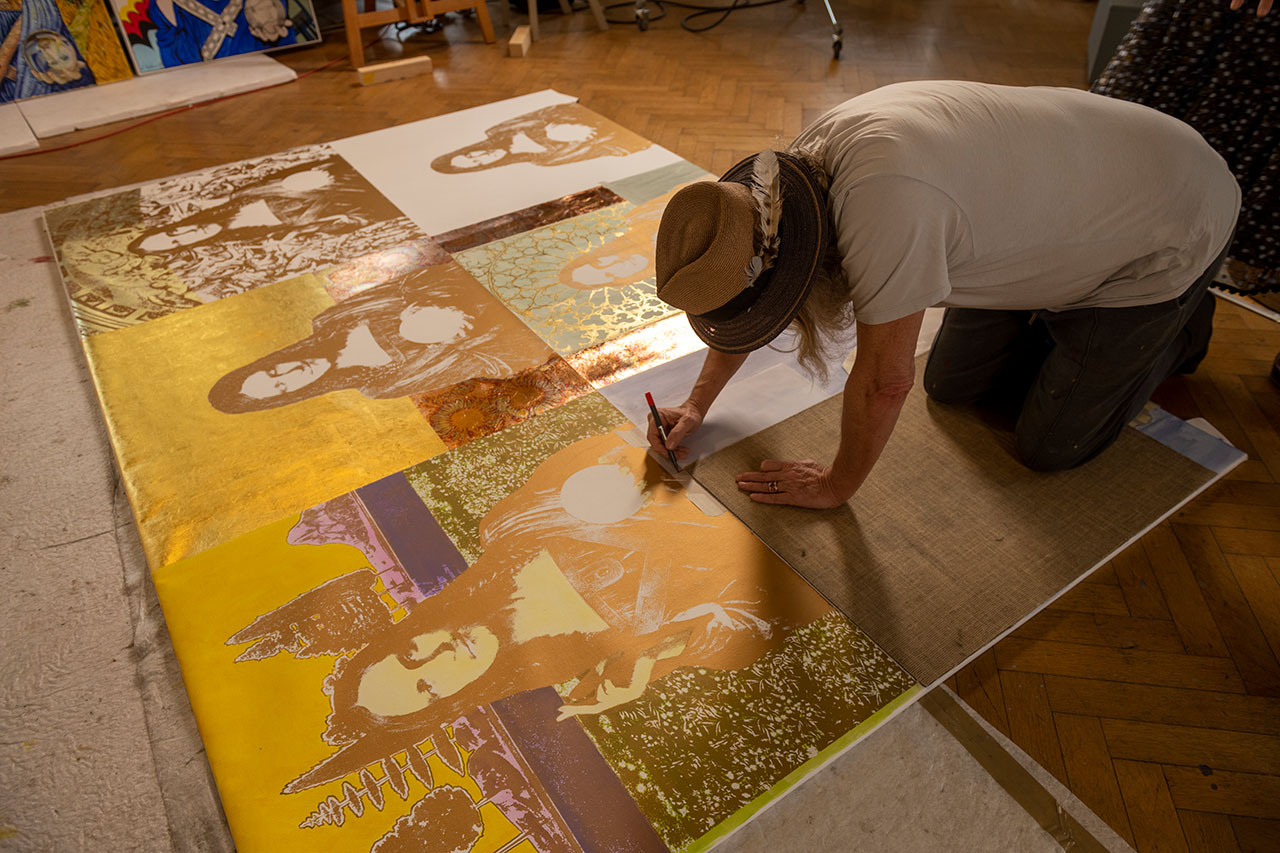
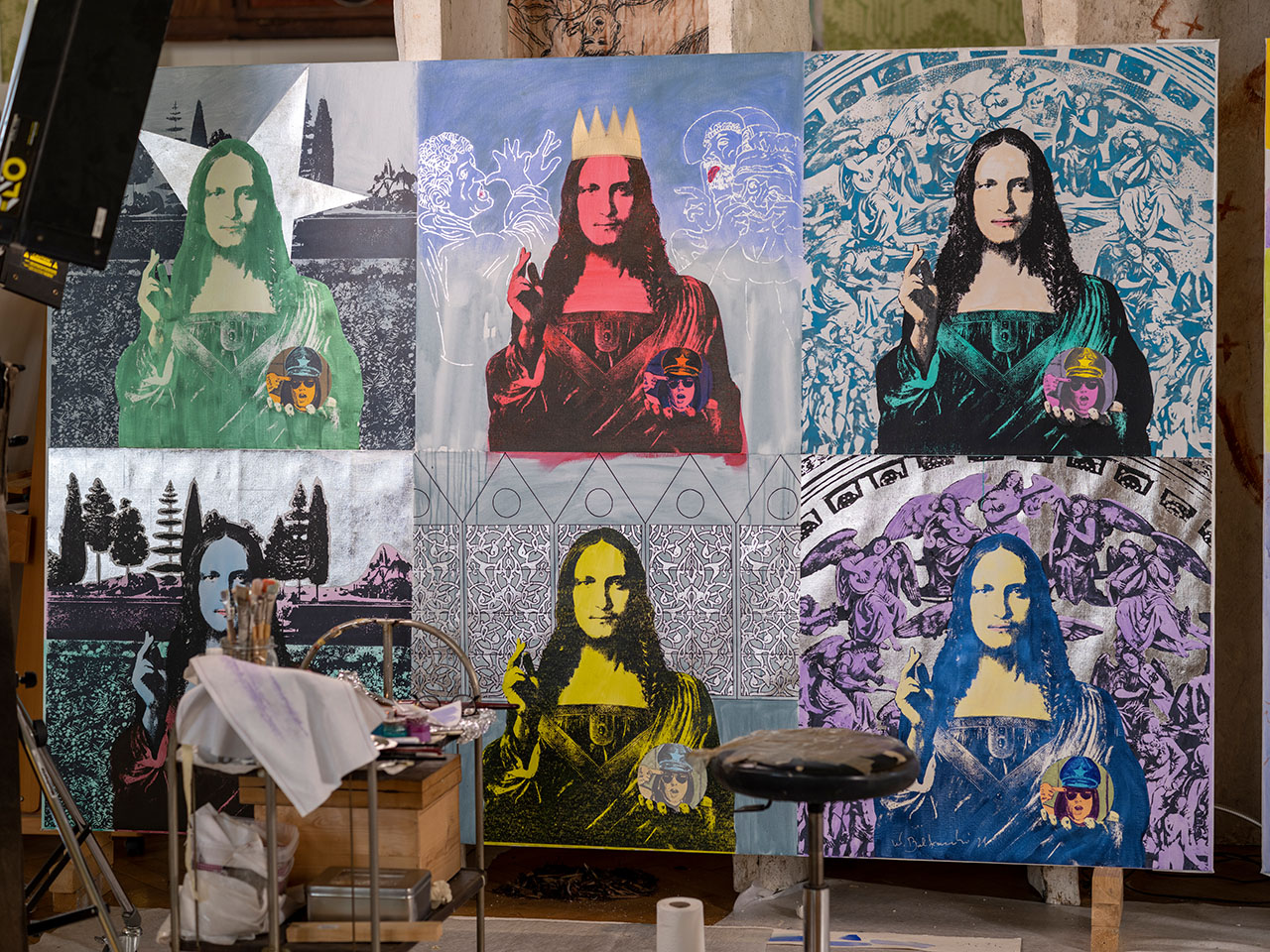
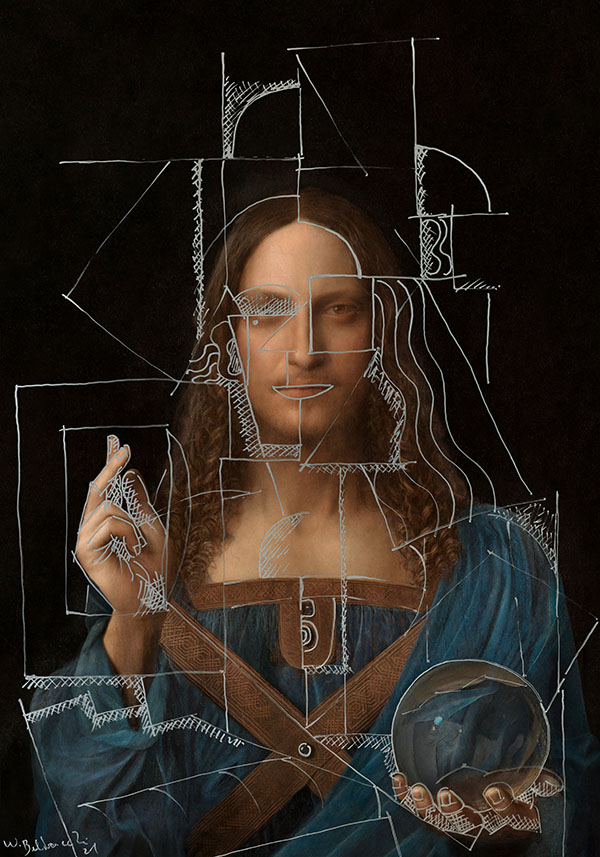
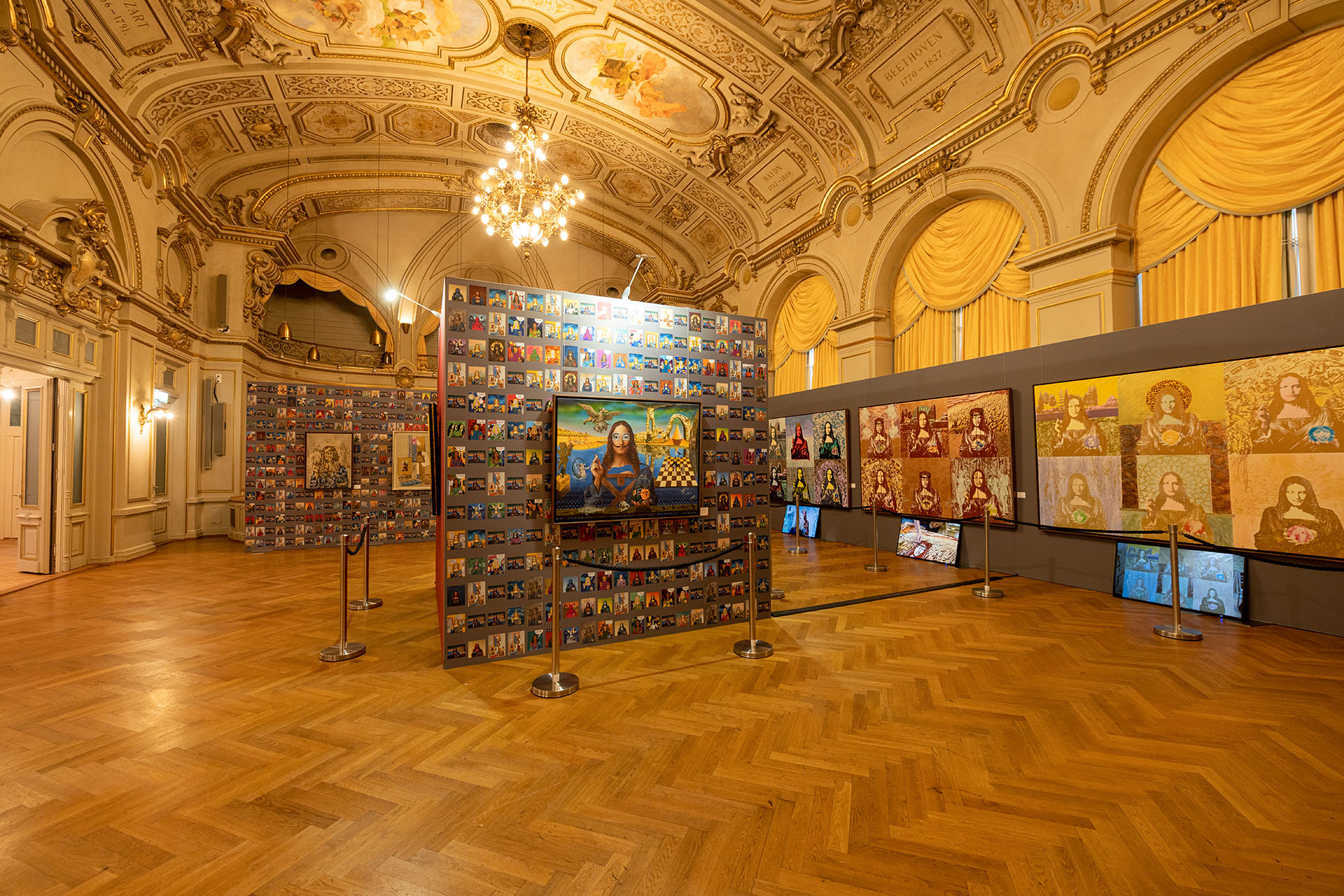
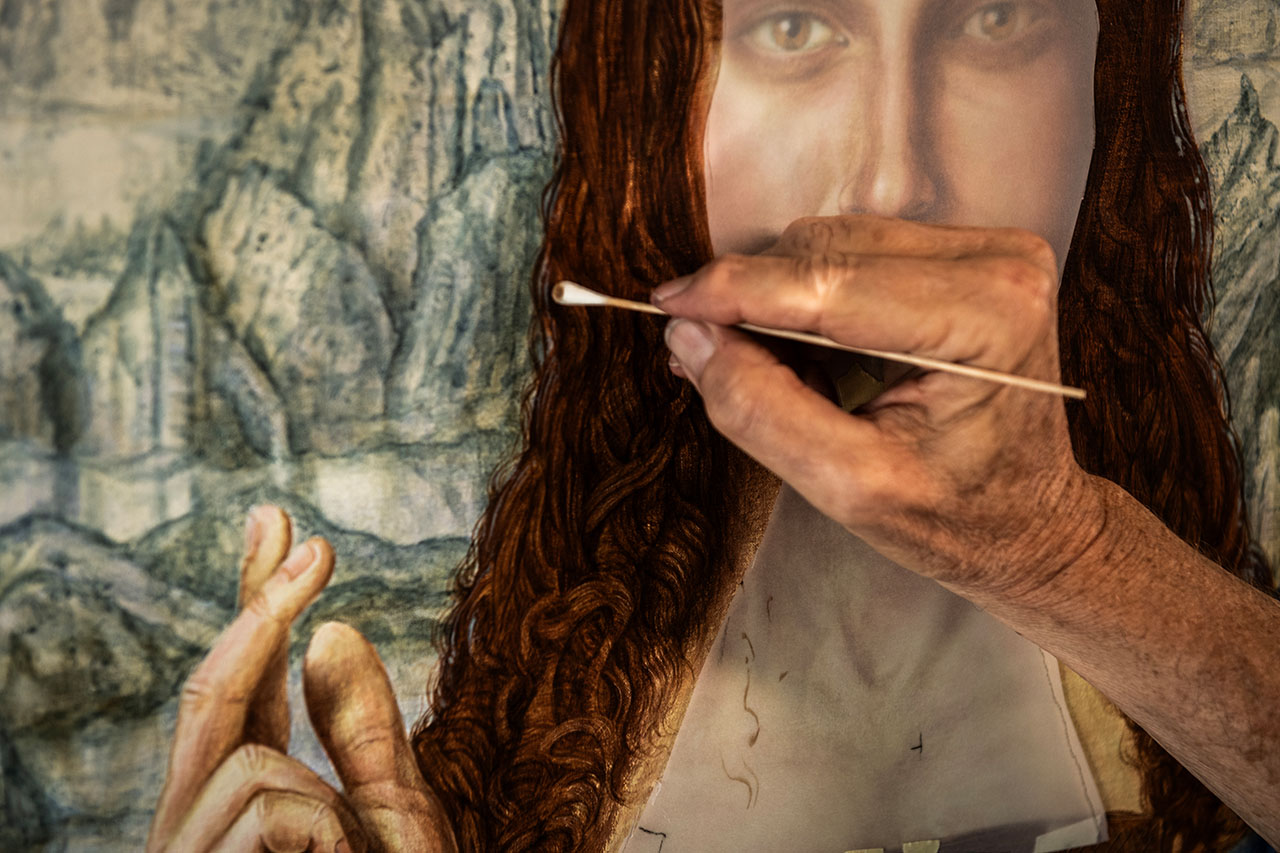
Wolfgang Beltracchi—”Salvator Mundi,” from the series “The Greats” (NFTs), 2021
The Michelangelo Comparison: Art and Deception
To do Beltracchi justice, you have to place the dimensions of this scandal in historical context. He is by no means an isolated case in the history of art—he stands in a tradition that reaches back to antiquity. The most fitting comparison is none other than Michelangelo Buonarroti.
The young Michelangelo, as art history tells it, sculpted a “Sleeping Cupid” early in his career. He buried it in acidic soil to artificially age it, then sold it through a middleman as an ancient Roman original to a cardinal in Rome. Why? Because antique art commanded higher prices than contemporary work at the time—and because he wanted to prove he was the equal of the old masters.
Just as with Michelangelo, Beltracchi’s “fraud” was made possible by his genius. Both demonstrated that the distinction between “original” and “forgery” is often less a question of aesthetic quality than one of name and market mechanics. Michelangelo went on to become one of the greatest geniuses of the Renaissance. Today, Beltracchi is well on his way to finding his own place in history—no longer as the man who copied others but as the one who discovered his own creativity and produces breathtaking works of art in an inimitable style. Inimitable? That’s his stated goal. And the proof that Saul truly became Paul lies in the fact that he has recently begun championing anti-forgery protection himself.
The Rebirth: The Redeemed Master
Wolfgang Beltracchi returned from prison a changed man. Not embittered but redeemed. He and his wife paid millions in damages, settled every debt, atoned for their deeds down to the last cent. This process of purification set him free. Today, he no longer has to hide behind other people’s names. He signs with “Beltracchi.”
Today, you encounter a deeply relaxed, humorous, and incredibly personable man. The arrogance one might expect of a once-in-a-century talent is nowhere to be found. At the center of his life is no longer fame at any cost but his family. His relationship with his wife Helene is the stuff of legend—they have weathered highs and lows that would shatter most marriages and emerged stronger for it.
He is especially proud of his daughter, Francisca Beltracchi. She has stepped into her father’s formidable footsteps yet found a path entirely her own. She has long since become a successful artist in her own right, carrying the family’s creative gene forward. The way Wolfgang talks about her reveals a great deal about him: there is no competition, only pure, nurturing fatherly love.
The Anti-Artist and the Hypocrites in the Temple
And yet the established art world remains divided over him. Many museums, gallerists, and auction houses regard him as persona non grata—the “anti-artist,” the Antichrist of the aesthetic establishment, as it were. They cannot forgive him. But what exactly can’t they forgive? That he painted poorly? No. They cannot forgive him for exposing them.
He held a mirror up to the art market. He revealed that expert opinions are often not worth the paper they’re printed on, and that the market is frequently driven more by greed than by genuine connoisseurship. That he is now shunned by this very establishment is not without a certain irony.
The art market—rightly or wrongly—is repeatedly accused of myth-making, manipulation, and price inflation. Beltracchi has served his sentence. His slate is clean. Many of his critics, meanwhile, continue to operate in glass houses. While they ostracize him, he watches the spectacle with a mix of amusement and sharp analysis. His experiences have honed his eye. He views society with a critical gaze, sees through the mechanics of self-promotion—yet he does so without rancor. He is free.
Innovation and Mastery: The Road Ahead
Anyone who thinks Beltracchi is resting on his laurels—or his scandals—is sorely mistaken. He is driven in the best sense of the word, fascinated by new techniques and technologies. He doesn’t shut himself off from the modern world. While many artists of his generation dismiss digital art, Beltracchi has engaged deeply with NFTs and the blockchain. He understands that art history didn’t end in 1950 but continues to be written in the digital realm. His project “The Greats,” in which he reinterpreted the history of art in thousands of variations and immortalized them on the blockchain, speaks to this pioneering spirit. But in the end, everything returns to the canvas, to the physical act of painting. And here, his mastery is beyond dispute.
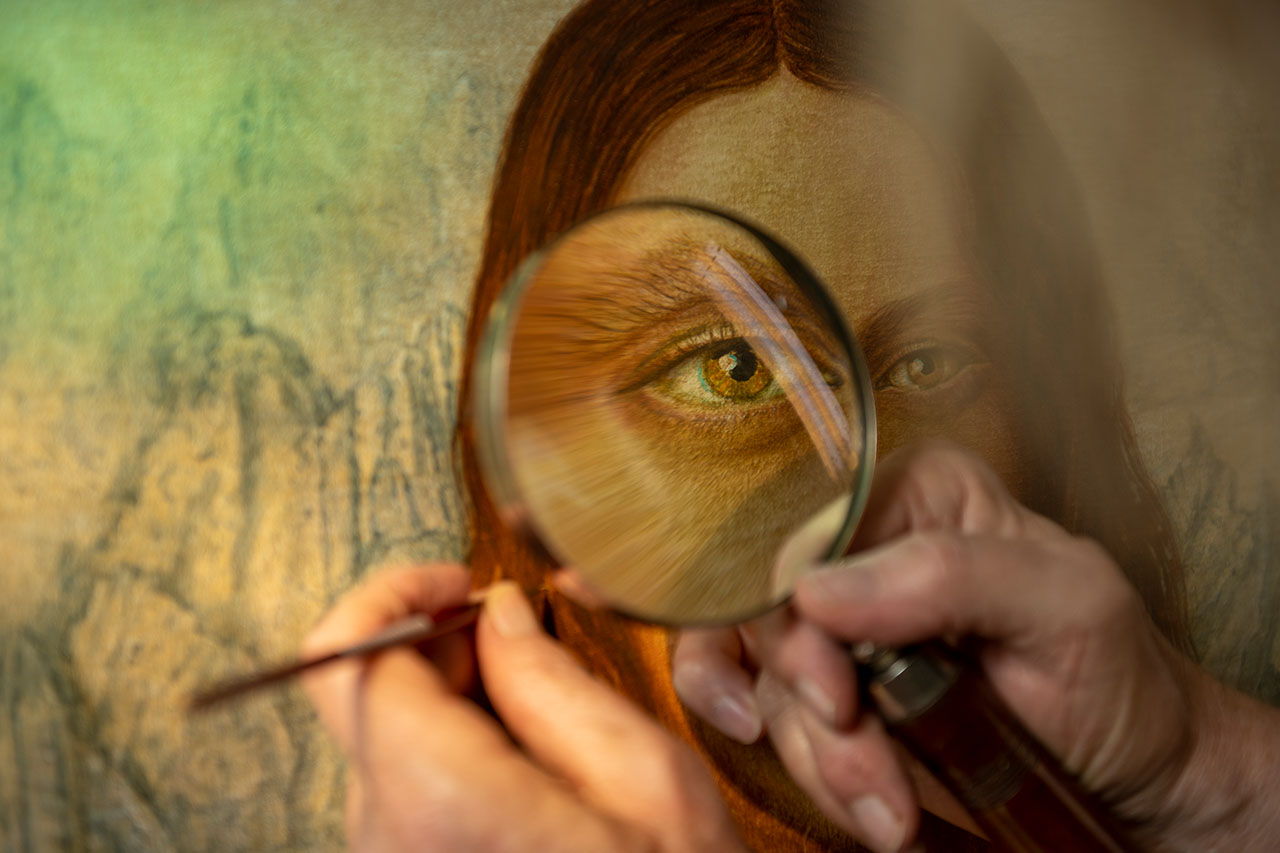
His visual language is one of unabashed directness and an energy that practically leaps out at the viewer. It’s the elegance of his line work, the assurance of his compositions, that captivates. Standing before a painting by Wolfgang Beltracchi, you experience a phenomenon only great art can trigger: its impact holds at any distance. From afar, the paintings command attention through their composition and radiance. They dominate the room. Step closer, and the eye doesn’t lose itself in blur but discovers new worlds. You see the layering of colors, the glazing techniques he learned from his father and perfected over decades. And when you finally take up a magnifying glass—the way the experts did when they desperately searched for flaws—you find no hesitation. Every brushstroke is deliberate. Every detail is executed with a devotion and care that cannot be forged.
Conclusion: The Original
Wolfgang Beltracchi has undergone one of the most remarkable metamorphoses of our time. He was the shadow that trailed other masters. Today, he is the light that shines upon the art world.
He unites contradictions that seem irreconcilable: he is a traditional craftsman who paints like an old master and at the same time a modern innovator—someone who can draw with all ten fingers simultaneously. Then again, he paints with his own blood—definitively inimitable—or was among the first to mint non-fungible tokens as digital art, known as NFTs.
He is a former inmate and a celebrated star, a tech devotee, a nightmare for museums, and a darling of the public. Perhaps it’s time to stop measuring Wolfgang Beltracchi by what he forged and start measuring him by what he has created—and continues to create. He taught us to look more closely. He showed us that art is born in the mind and felt in the heart, regardless of the name beneath the painting. He is no longer a forger. He is Wolfgang Beltracchi. And that, as his daughter and his wife would confirm, is his greatest masterpiece.
Anyone who wants to see his paintings should make their way to the exhibition “Divine Stories” in Prague, on view from May 7 through September 27, 2026, at the Obecní dům.
Looking ahead: a documentary about Wolfgang Beltracchi is currently in production, and three monographs on his life and work are being written. So there’s plenty more to come.
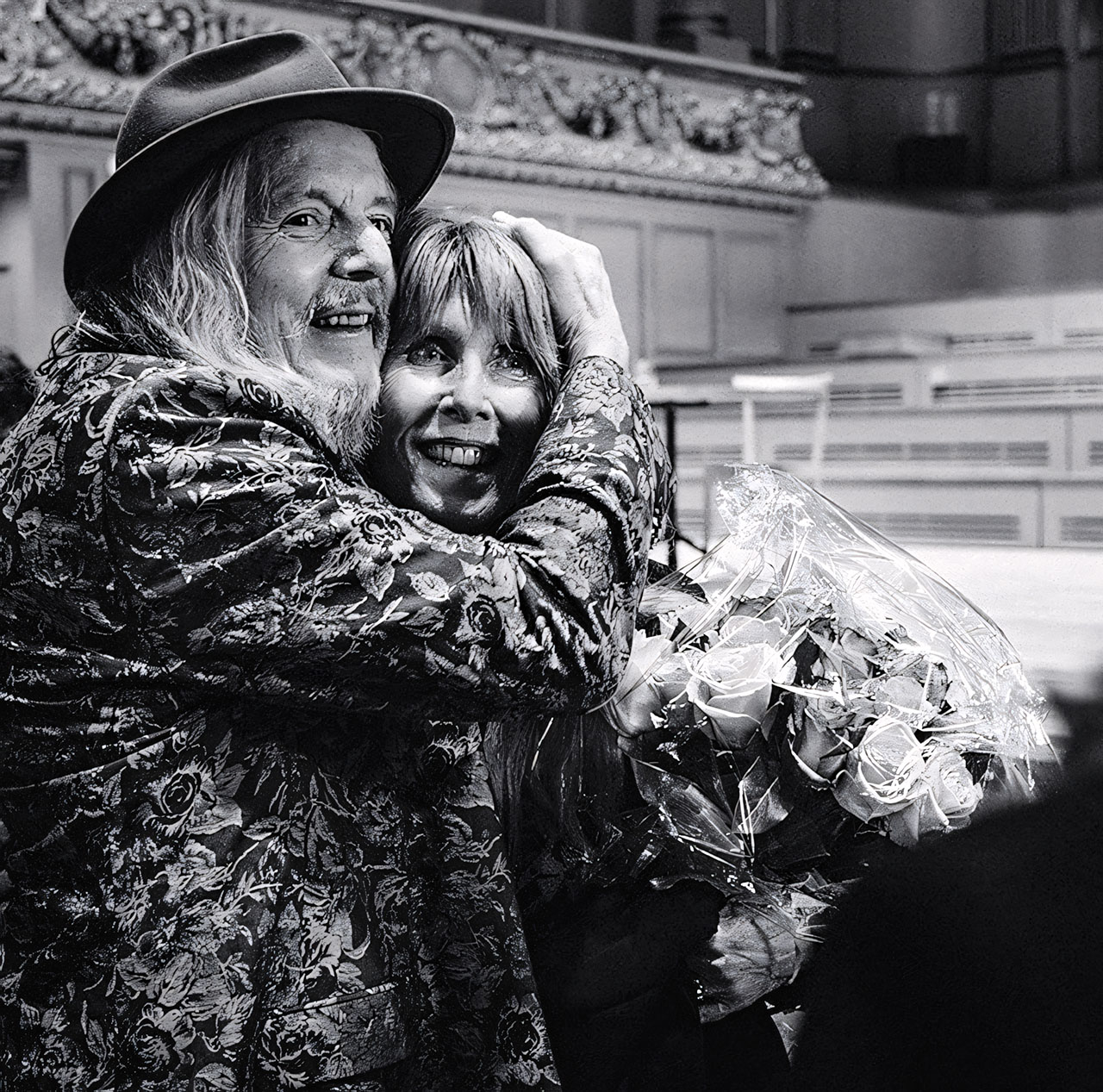
Wolfgang and Helene Beltracchi
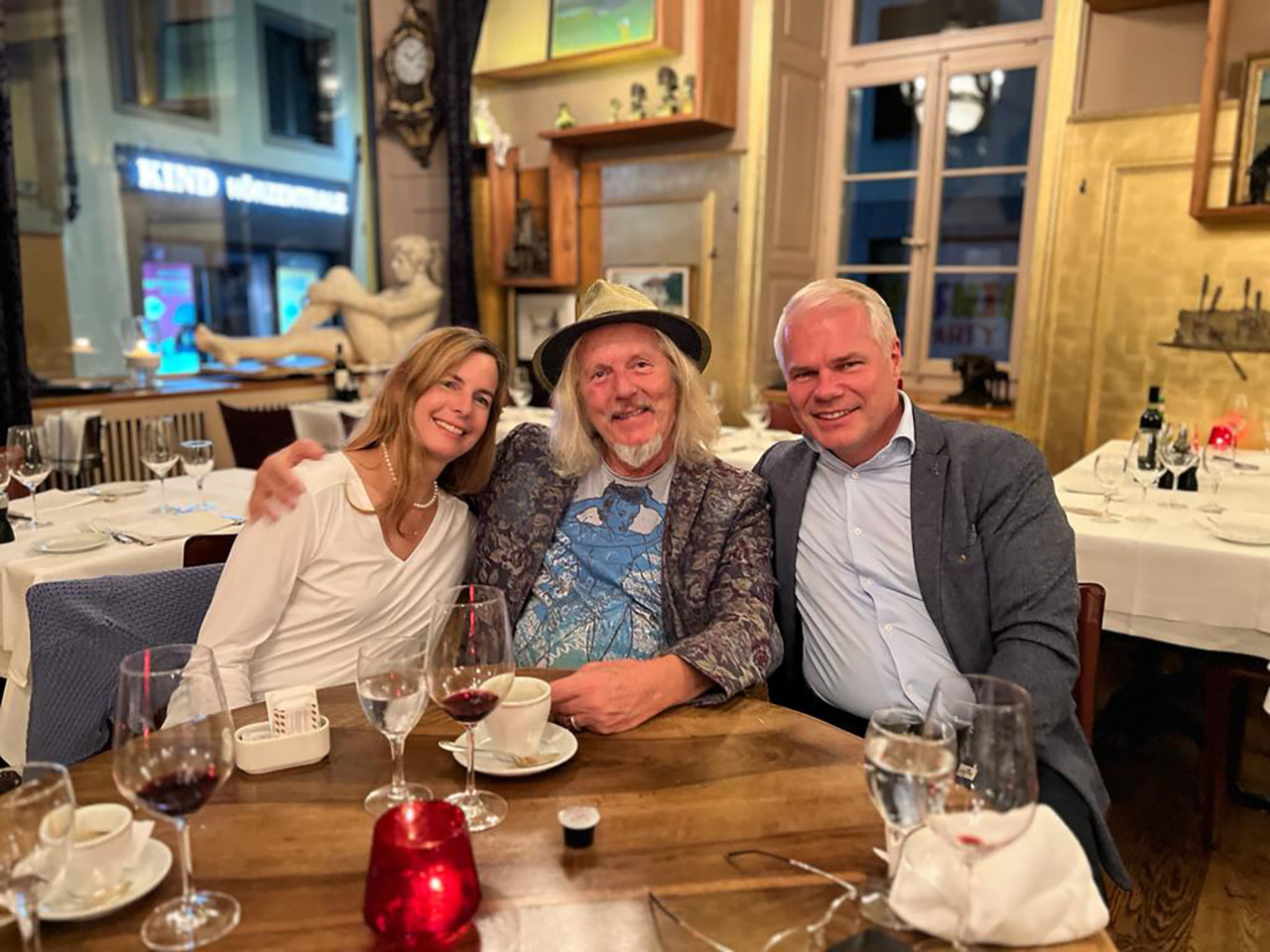
Anna and Friedrich Kister with Wolfgang Beltracchi