


PEMBA ISLAND
Of Living Arrows and Trumpet Fish
I grew up in hotels. Worked in hotels. Hotels are my life. I’ve written, celebrated, and mourned in hotels. I’ve sat in lobbies. Sweated in steam rooms. Enjoyed the view from hotel-room windows. I’ve seen many rooms, but never one like this, which is underwater.
I must admit, I didn’t want to go on vacation. When on vacation, you don’t do much else but lounge about. Sunscreen. Routines disrupted. Sand on your feet. I don’t need that. Cigars? I can smoke them at home, and my wine cellar is well stocked. Yes, I know, I’m a snob. I’m insufferable, especially when it comes to vacation planning. I prefer to travel for work. People interest me. Stories. Food culture. Or, if necessary, even bottling plants in a romantic wine region. Trips where I can be sure that something exciting is going to happen. Vacation is the opposite of that, because nothing is supposed to happen. Yet so much did happen — in just one unforgettable night.
Welcome to the slow pace
The airport, which can be reached directly from Switzerland, is so new that it wasn’t even operational when I traveled there in December 2021. Instead, there were plastic chairs and downpours. Welcome to the slow pace. It took several hours before the journey continued, on a small propeller plane. We were headed for PMA, which isn’t short for Palma de Mallorca, but for Pemba Island. Pemba is the second-largest island in the Zanzibar Archipelago off the coast of East Africa. “You are in safe hands,” reads a placard advertising the services of the Zanzibar Insurance Corporation, and you immediately believe it — because you have to.
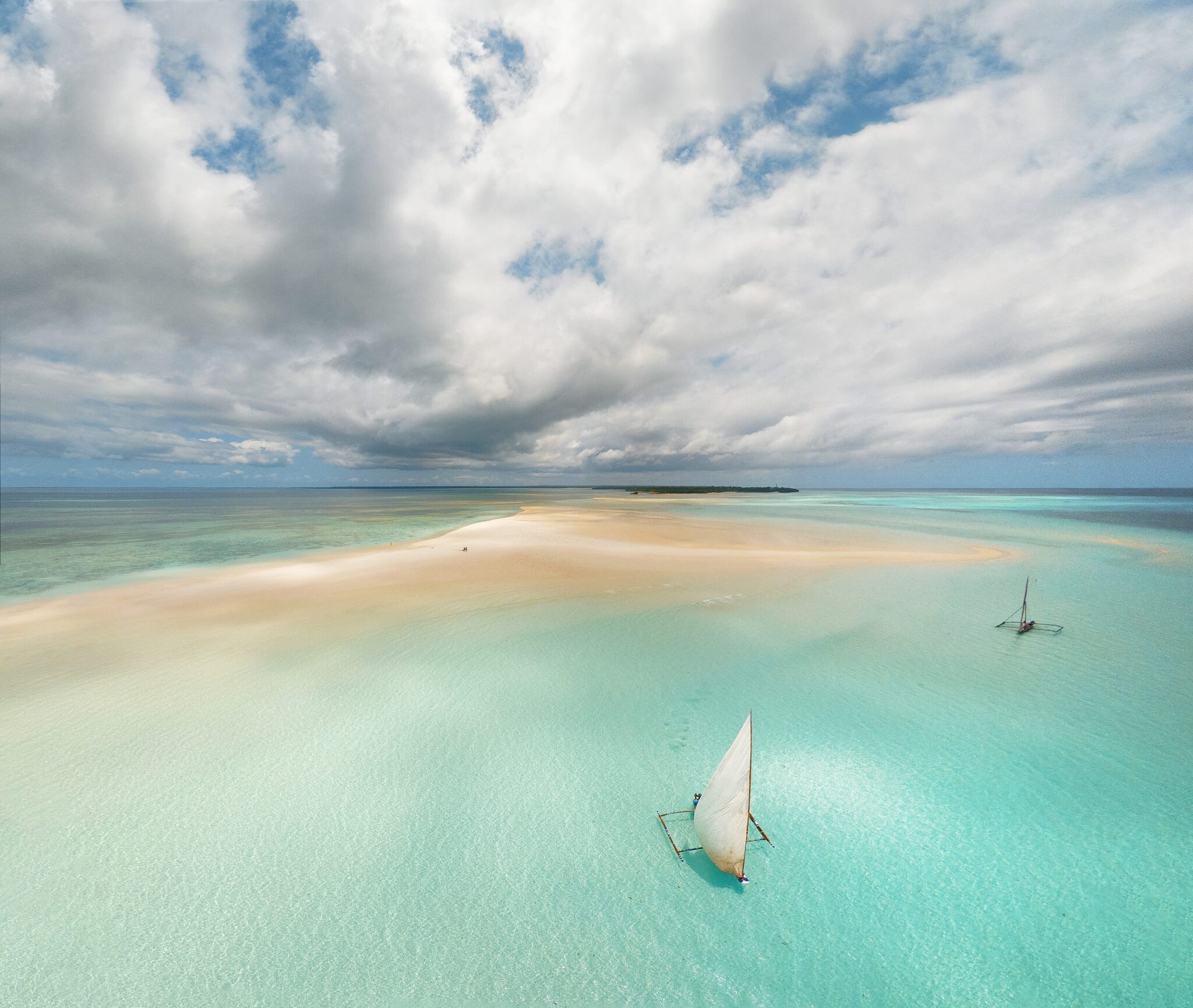
Pemba is not a destination for those with a penchant for the escalators of Las Vegas, mirrored skyscrapers of Dubai, or some kind of bling in general. Pemba is all about nature — even more so than Zanzibar. You could say it’s idyllic. Somehow untouched. Which cannot be said of the roads, though. They’re bumpy, winding their way through forests and villages, past crops and animals, as they cross the island from one coast to the other. Pemba is known as the island of cloves, producing 70% of the world’s supply. Good to know, but again — it’s a holiday. An hour and a half into our drive, someone opens the door of our Jeep. I feel like a sack of potatoes at the end of the world. “How did you enjoy the Pemba massage?” the man welcoming us asks with a grin. I could really use a strong drink.

Not just for divers
The Manta Resort. Sounds like it should be in the Maldives (famous for its manta rays), yet it is hidden in a orner of the jungle on a remote island off the east coast of Africa, and it takes a certain dedication to find it. “In the past, only expedition divers used to come here,” says Matthew Saus, an enthusiastic free diver and the hotel’s proprietor. Apart from the location, everything else is apparent at first glance. It’s beautiful. It’s hyper-private and mega-relaxed, and these facts make it more exclusive than traditional opulent luxury. The touristic approach of the people behind the project is an inclusive one, taking into consideration the local community, and creating a system that benefits everyone — especially nature, both above and below the water, as well as the local village. All the hotel staff live in the nearby village. The foundation that supports this is funded, in part, by the rates that hotel guests pay for their stay. The thought process that led to this conviction stems from the desire to protect the underwater world in all its incomparability from mass tourism as well as controversial fishing methods. Yes, Manta Resort remains a place for diving enthusiasts — but not just for them.

Back to the room
Let me take you one step back, to the introductory part. Back to the room. It is one of a kind, and I’ll tell you straight up: it costs USD 1,840 per night, with a minimum stay of three nights. Viewed from the pristine white beach, it looks like a simple, unanchored and unmoored floating raft. The Underwater Room is the name of this Swedish-designed hut anchored in a sort of blue hole in the ocean, just outside the hotel. Once upon a time, it used to be the washing station for the local manta rays, which are no longer local. For guests staying at the Manta Resort it takes mere moments for you to feel at home — not least thanks to the charming and witty private butlers. Our very own butler even lets me head off into the kitchen to meet Chef Rashid, a towering former security guard turned cook. He’d rather be cooking than guarding over anything. He shows me how to prepare mangrove crabs and I am thinking that maybe vacations aren’t so bad after all. A thought that lingers as I gaze out at the sea from our stunning beachfront villa. Pristine white sandy beaches, massages, ceviche made from mangrove crabs, dive sessions — it would be enough to justify the story ending here, leaving readers pleasantly intrigued. But there’s that invisible, underwater room out there, a good 800 feet offshore. How extraordinary it must be to sleep underwater and watch the fish being fish. What do fish do all night?
What do fish do all night?
The answer is simple: They watch you as you stare at them, unable to sleep. Our butler took us and provisions — food, wine — to the underwater room, by boat of course. We were pretty much the only guests on the island during pandemic times. Then he butler left, leaving us all alone. In the open sea. Equipped with an emergency phone. The bed is 16 feet below the water’s surface. The sleeping quarters measure a little less than 100 square feet, and are reached by climbing down a ladder. Once there, you settle in, ready to observe. It’s like being in a submarine. When night falls, the lights come on and the action — normally hidden underwater — begins. Even for experienced divers, it’s fascinating to witness the hunting strategies that various creatures have developed. They dart from above or below. I finally understand why barracudas are also known as arrow fish. By day, they simply circle divers, calm and sluggish. But at night, they’re living arrows, shooting upwards from below.

A feeding frenzy
It’s as if life on the reef was dictated by an exact timetable, a schedule that all predators must follow. Batfish. Trumpetfish. Triggerfish. Big ones. Small ones. They’re all curious. It’s a constant coming and going, a feeding frenzy, and I’m secretly glad I’m not a fish — out here, it’s all about survival, night after night. What stress. And what does the sole yellow trumpetfish (dubbed Nick by the staff) think as he repeatedly peers down into the room from above? Apparently, he was watching even during the room’s construction, and now he still wants to know what’s going on inside. Illuminated by the inside light, all the fish glow. Some appear, some disappear. Only you remain, encapsulated in an aquarium. Eight windows. Two inches of glass separate you from the sea. This must be what it’s like to be a fish in captivity. Inevitably, I feel out of place, and the realization that I wouldn’t survive a single night out there comes quickly. Inside, some are awestruck, while others feel claustrophobic. Sleep is nearly impossible. If you want to sleep, you head to the sundeck. It’s right beneath the starry sky. Another opportunity to encounter an unforgettable night.
Information
The Manta Resort, Pemba Island, Tanzania: themantaresort.com
The foundation behind the resort: kwaninifoundation.org
Words: Andrin C. Willi · Images: The Manta Resort